Search
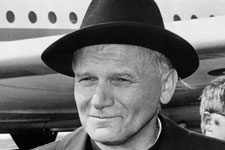
1. Karol Wojtyla, the foreigner.
When Karol Wojtyla was elected to the throne of St. Peter on October 16, 1978, he was of course the first non-Italian pope since the Dutchman Adrian VI in 1520, but it is for another reason that we consider that he was a foreigner… to the Catholic Church. Let us cast full light on his personality in order to compensate for the inadequacies of the process of beatification ensuing from its obstinate refusal to study his doctrine, and for good reason.
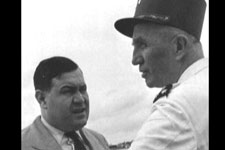
4. The rebellion and its accomplices (1954-1956)
« “ To save an historical community ”. One community, not two, where there would be Europeans on one side and Muslims on the other; the colonial institution had united in an admirable reciprocity of services. This resulted in a concrete, living and historical order, which is not debatable, and which must be saved, inasmuch as forces of evil work desperately to destroy it. »
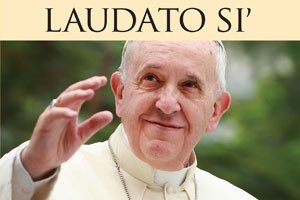
“Praise be to you, my Lord !”
Everything that flows from the mouth or the pen of this Pope is limpid like “ our sister water. ” Unlike his immediate predecessors, he does not put his faith in man but in God. Consequently he is able to lay out the principles of an integral ecology, at the furthest remove from both Jacques Maritain’s integral humanism and Paul VI’s integral development.
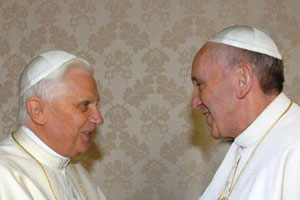
The plot
According to Die Welt: “ The Catholic Church is currently in a transitional phase : Pope Francis is encouraging the Church to evolve, which clearly antagonises the conservatives. ” “ The conservatives ” of what? Of the Second Vatican Council ! Does that mean that there is a contradiction between Pope Francis’ line and that of the “ Emeritus Pope ” ? Indeed there is !
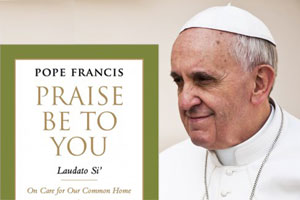
Pope Francis, a praise of glory
I commented on the first chapter of this encyclical that assesses the damage caused by fifty years of conciliar reformation, even in creation, ever since the Church saw fit to believe in the myth of progress. The following chapter lays the foundations for a restoration, under the title : “ The Gospel of the Creation ”.
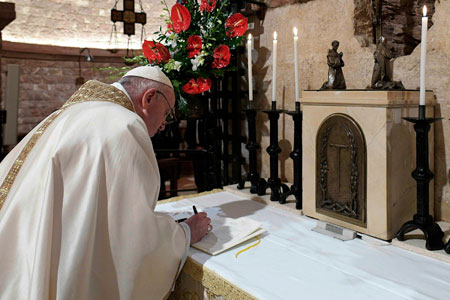
“Fratelli Tutti” from John XXIII to Francis
Pope Francis’ encyclical is an unprecedented monument, because it is intended not to be Catholic. The first two words are taken from Saint Francis of Assisi, but without appealing to the love of the Heart of Jesus-Mary which, for Saint Francis, is the source of this universal brotherhood. It is only a matter of proposing “a way of life marked by the flavour of the Gospel” and to the taste of “my brother Bartholomew, the Orthodox Patriarch,” with the encouragement of “the Grand Imam Ahmad At-Tayyeb.”
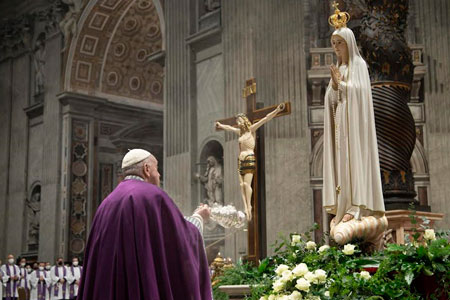
Consecration to the Immaculate Heart of Mary
The time has come to display the ‘intelligent traditionalism’ advocated by our Father in the conclusion of his study of the ‘Great Crises of the Church.’ Let us reread the act of consecration to the Immaculate Heart that Pope Francis pronounced at Saint Peter’s on March 25, after a ceremony more penitential than festive, and thus consonant with the tone and content of this Consecration.
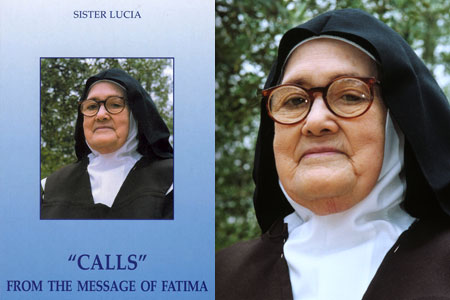
“Calls from the Message of Fatima”
1. Sister Mary-Lucy of Jesus and of the Immaculate Heart speaks to confirm our faith
Sister Lucy, whom Pope Francis recently declared Venerable, did not write “Calls from the Message of Fatima” on her own initiative, but was charged with the mission to teach. In the course of her book, she teaches everything that is lacking in the new catechesis, which is itself the fruit of the new evangelisation that Pope Francis is again trying to revive. There is no way to dispense with the Message of Fatima, “which,” Sister Lucy wrote, “God chose to entrust to me for all men.”
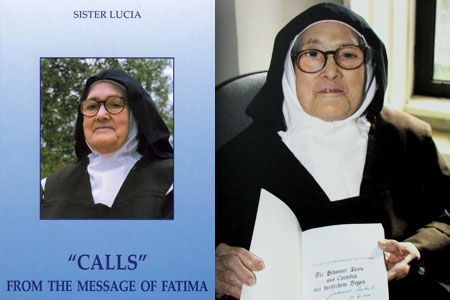
“Calls from the Message of Fatima”
1.1. An apparent digression in order to call for the required conversion
Sister Mary-Lucy speaks to confirm our Faith. « I address this to all those who have faith and also to all who have not the happiness of possessing this gift of God… I am replying to all in general with “Calls from the Message of Fatima”, which God chose to entrust to me on behalf of all. »
Ps 9 : Jesus ! Mary !
In expectation of Jesus and Mary, this psalm already proclaims the annunciation of the « daughter of Sion », the personification of the « poor of Israel », faithful Yahwists, whose faith is upright and whose hope is invincible.