He is risen !
N° 275 – March 2026
Director : Frère Bruno Bonnet-Eymard
Deus Mariæ
Total Theology by Father Georges de Nantes (1)
in response to the note Mater Populi Fidelis
from the Congregation for the Doctrine of the Faith
“OPPORTET haereses esse. It is expedient that there be heretics!”(Co 11:19) wrote Saint Paul to the Corinthians. Why? “Because it animates Christians! And so, it brings on a fight, theologians get back to work, there is polemic, there is controversy, and then Catholics become interested!” our Father said on March 23, 1972, in Marseille.
So it is even today. The Vatican publishes the doctrinal note Mater Populi Fidelis, which is as insulting to God as it is offensive to the Virgin Mary, since it was intended to ‘put Her in Her place’, that is to say, the very last place! Well! Let us enter the fray armed with the weapons that our beloved Father bequeathed to us. At stake in this battle is the place of the Blessed Virgin between God and humanity, or, to put it better, according to our Father’s relational theology, the articulation of the relationships between God the Trinity, the Immaculate Conception, and the children of Adam and Eve in the divine design.
Before getting to the crux of our subject, we must firmly impugn any authority attributed to this document. This is because it relies heavily on sources that we, as disciples of Father de Nantes, can presume to be ‘heretical, schismatic, and scandalous’. Indeed, these sources contain numerous references to Paul VI and the Second Vatican Council, John Paul II, Benedict XVI, and Francis, which serve to support the most offensive statements against the Virgin Mary. Benedict XVI and Francis have canonised their predecessors without having cleared them of this triple accusation of heresy, schism and scandal that Georges de Nantes levelled against them three times in 1973, 1983 and 1993, in his three ‘Books of Accusations’. By acting in this way, these Popes not only rendered these canonisations null and void, but they also reinforced our suspicions of heresy, schism, and scandal against all these Supreme Pontiffs. It would therefore be appropriate for the Congregation for the Doctrine of the Faith, before attempting to perform a theological work on the Blessed Virgin, to begin by cleaning up its own back yard, since it has in its official files these three Books of Accusations that remain unrefuted. So are they ‘irrefutable’? The question still remains unresolved.
In any case, the theologian who wrote these three Books, was himself scrutinised by the Holy Office and emerged victorious. He then went on to work for more than thirty years, continuing to defend the Catholic Faith within the Church herself by bringing these terrible accusations of heresy, schism and scandal against Paul VI and John Paul II, who did not fail to try to silence him by all means, without ever succeeding in finding him at fault, even today. This theologian’s name is Georges de Nantes, in religion Brother Georges of Jesus-Mary, our beloved founding Father.
Now, our Father contributed to making substantial progress in the field of theology, an advance that not only relegates Cardinal Fernández’s speculations to the rank of remarks that are not only blasphemous, but also obsolescent. This progress also transcends the outdated ‘minimalist-maximalist’ debate● that took place at the Second Vatican Council. It re-embraces the entire tradition of the Church, from her greatest doctors to the humblest old woman reciting her Rosary, leading this tradition to the marvellous acme of contemplating our Good Triune God loving Mary eternally!
Let us join this avant-garde theologian giving his brilliant lectures on ‘Total Theology’, in the Great Hall of the Mutualité Conference Centre in Paris from October 1986 to June 1987. At the beginning of his treatise on the Incarnation, the crux of his Marian theology, our Father announced: “The most beautiful lecture of my life!” (Published here for the first time in English.)
I. THE GOD OF MARY●
THE MYSTERIES OF BOTH THE INCARNATION
AND THE IMMACULATE CONCEPTION
Our Father teaches a biblical and mystical theology in which the data derived from our reason do not precede those from our Faith, rather, they are subject to it. Reason works in the service of the understanding of Faith; we must therefore begin by contemplating the mystery revealed to us by Scripture and Tradition, with the eyes of faith. Thus, mysticism moves forward under the guidance of the Word of God, and reason examines and strives to understand docilely, not blindly, but not imperiously either. Therefore, according to our Father’s teaching, it is faith that commands.
This is how mysticism has brought us into the presence of the Most Holy Trinity without any intellectual obstacles: God is three Persons. Too bad if Aristotle and the Aristotelians have objections! For us, this is not a problem. This God, Who is indeed one substance, one Being, one God, is mysteriously – we do not understand it, but we are very satisfied to know it – three distinct Persons, the Father, the Son, and the Holy Spirit, Who maintain a mutual, eternal, and necessary exchange.
“Before the world existed, God is already Father, and He can only be Father if He already has a Son from all eternity. Our experience teaches us that a father only exists insofar as he has one or more sons. Therefore, if God is Father from all eternity, He must be Father to a certain Son Who is His image, His intimate word, the expression of His whole mystery. It is this fatherhood that set Him on the path of creation whereby He called us all into being, as adopted sons, in the image and likeness of His only Son.”
Let us add a brief warning against the temptation of anthropomorphism: “It is not because there are fathers and sons on earth that we should get into the habit of saying that God too is Father and Son, thus making God in our own image. We must not reverse the roles: it is because God, in His eternal mystery, is a Father begetting a Son similar to Himself and equal to Him, that in His creation He created fathers and sons. He wanted human beings, like animals for that matter, to beget one another, because this resembled what He Himself was. He wanted this when He created Adam and Eve and all the generations that followed, so that we might one day fully understand His own mystery.
“This is not anthropomorphism, it is, on the contrary, theocentrism or ‘theomorphism’.”
So here is the terms of the question, the subject of our Father’s teaching, which will delight us and captivate our attention:
This Word became flesh; this Word, this Son of God became incarnate. And probably, since He is a Word, if this Word took human form, it was with the intention of speaking to us. To pose the question “why” is to examine what the Word had that was so difficult to convey, and therefore so new, that it required Him to become incarnate in order to express it. This is a truly classic theological question, and can be entitled: What is the motive, the reason for the Incarnation?
Our Father begins by presenting the two classic answers, one Thomist, the other Franciscan.
THE MUDDLED RESERVE OF THOMIST THEOLOGY.
Thomistic theology, which is heavily dependent on the philosophy of that pagan Aristotle, has shown us God as pure Act. God is God, immobile, locked in His transcendence. He has no reason to come out of it; and does not! The Incarnation is truly an incomprehensible mystery, both in its manner and in its profound intention, for which we have no clue, no preparation, and no premonition in nature.
We must therefore confine ourselves to the Creed: ‘propter nos homines et propter nostram salutem.’● It is to redeem us from sin that God became man. Or rather, as Thomist theologians say: a ‘perfect human nature’ was assumed by the divine Person of the Son, in such a way that this ‘hypostasis’ or ‘person’ could sacrifice Himself as a man in favour of His human brothers, in their stead. And, as God, the Son infinitely merits and makes “de condigno” reparation (in strict justice) for the infinite offense made to God the Father by our first parents.
Theologians call the fruit of this redemption ‘vicarious satisfaction.’
Let us keep in mind that if Adam had not sinned, Saint Thomas would say: ‘I do not see why the Son of God became man. There was no necessity! It was to make reparation for sin that he became man.’
THE BOLD IMPETUOUSNESS OF SCOTISTIC THEOLOGY.
For Duns Scotus, it is unthinkable to consider that the Incarnation, this marvellous and supreme crowning achievement of human nature, could have depended on a fortuitous event in our history, and even more so on sin! God is not subject to time: He did not first see sin and then remedy its consequences by an unexpected decision to incarnate His Son.
“The history of the world lies before His eyes. God ‘is’ in an eternal present. Did He first decide on the Incarnation as the summit of History and Creation? Yes, certainly, say the Scotists, and not only by justifying it in our eyes by the foresight of original sin. By what else then?
“This God-Man, this God made man, is the most beautiful of all men, a God so good Who became man like us. It is so beautiful, it is of such wonderful value, it is such a crowning achievement of human history that, even if there had been no sin, of course, God would not have renounced this pleasure, this joy, this glory of becoming man.”
Our Father, however, remarked: “Here the Scotists are engaging in Platonism, in aestheticism. Their admiration for the marvellous Person of the God-Man retains something formal, Platonic, abstract, aesthetic, which isolates the Incarnate Word from God His Father and from men His brothers. By making Him a totality that is no longer sent but ‘subsistent’, no longer efficient but final, this Scotist school falls back into a cold substantialist theology, where contemplation separates rather than unites.
“The proof of this,” explained our Father, “is the kind of praise pronounced by so many (Platonic) Fathers and theologians on Christmas Eve, celebrating in the Christ-Child the marriage of humanity and divinity, whose nuptial kiss they describe with rapture: this embrace of two ‘natures’, the divine nature with the human nature in Jesus. This theory ultimately leads to making the Person of Jesus a human and divine couple, and the Virgin Mary a simple bridal chamber wherein a marvellous love is celebrated, in which no human being, not even the Virgin Mary, has any part! It is useless to knock at the door, to try to listen, to see! Nevertheless, each person, through grace, will have some analogous participation in it, in themselves.”
So, for us at least, the matter is closed! Well, no! For our Father opens a new path:
THE ETERNAL REASON FOR THE INCARNATION OF THE WORD.
“God created the world for Angels and men. That being said, why did He send His Son to earth? For what necessity? What ‘reason’? To reveal His design of grace to men? To make a covenant with them? Yes, and much more, to save them.
Here is our Father’s answer: “We choose the Scotistic solution. Saint Thomas is not absolutely opposed to them, but let us say, to put it briefly: God had the plan, from the moment of Creation, to send us His only Son in human form. Therefore, in God’s original design, the Incarnation had to take place. It was not sin that led to this decision as an afterthought.”
Our Father then asks the real question: “There is certainly an intrinsic reason, that is, the Incarnation is related to everything we know about the human condition. Thus if, by considering how human’s beget from father to son, we can divine that God is like a Father, and from this intuition – even before it is revealed to us –, that He is the Father of a Son in eternity, then by looking a little more closely at how the world is made and how man was created, we will be able to understand why Christ became incarnate. We will have presentiments of the Incarnation even before it has been announced.
“Adam was created as a son of God. But if we continue to observe the work of creation, we see that as soon as Adam was created, God created Eve from his side, from his ribs. And so, the distinction between the sexes is absolutely fundamental in creation. ‘He made them male and female’ and, the Bible adds, ‘He created them to His likeness.’ (Gn 1:27)
In order to obey His Father and always be His living and true Word, Jesus wanted to be born of the Virgin Mary, the ‘Woman’ as He would call Her twice: at Cana, where He anticipates His ‘Hour’, at the request of His Mother, at the beginning of His public life which would lead Him to the fulfilment of this ‘Hour’ on the Cross at Calvary. (Jn 2:4 et 19:26)
She, a Virgin, He, without a human father, form the new couple in Whom the totality of love is forever and supremely personified; yes, the Adam and Eve of the fullness of time, of the New and Eternal Covenant, are Jesus, the God-Man, and Mary, the Woman-creature unlike any other. The parallel between Jesus and Mary and Adam and Eve is also evident to Saint Bernard.
“A covenant was formed which is not a conjugal union of the usual kind, but finally it is the unparalleled union of this Woman with the Man Who enclosed Himself in Her virginal womb. He was not only Her Son according to the flesh, He was Her Creator, Her Master, in the fullness of His Person as Son of God in the womb of this Virgin. Therein an incomparable union was forming that had been prophesied by the prophet Jeremiah: ‘The woman shall compass the man’ (Jr 31:22). All the Fathers of the Church understood that this formula was a prophecy of the virginal conception of the Messiah.
“This couple, which appears, in the eyes of our natural experience, to be the couple formed by the Mother with Her Child, is much more mysterious, transcending all these boundaries. She is the perfect Woman, a creature unlike any other, to Whom God unites Himself in a way unlike any other, drawing His flesh, His very existence, from the existence of this Woman. The first vision we have of them, therefore, is that of two persons in one flesh. This is the very definition of marriage according to the Bible: ‘They will be two in one flesh.’(Gn 2, 24)
“This is so much so that certain Fathers and Doctors of the Church, such as Saint Leo the Great (391-461) and Saint Bede the Venerable († 735), declared Jesus to be ‘consubstantial with Mary’ as well as ‘consubstantial with the Father’. They used this very strong word to describe the closeness of the union between the Son and His divine Father, and His ‘Divine Mother’. He is one with His Father, and now, by becoming man, He is one with His Mother.”
In a bold application of his mystical theology, our Father performed a reversal of perspective that enabled him to resolve the outstanding question:
“In the beginning of the world, even before the world came into being, as Saint Paul writes to the Colossians, God envisaged His Son as the Firstborn of all creatures(Col 1:15), so that Jesus is the true prototype, and Adam His replica, oh so much inferior! That is to say, even before sin, even before the creation of Adam and Eve, God conceived His Son, the Word, as man. And He conceived, in an analogous but not identical way, as the most beautiful of all creatures, the summary of all creation, the perfection of all creation, opposite His Son, the Virgin Mary, the perfect woman. In the 20th century, Saint Maximilian Mary Kolbe gave a perfect explanation of the Immaculate Conception, saying: this name does not only mean that the Virgin Mary was born without original sin, but that the Virgin Mary is the first Conception, the first being conceived by God to be the replica and perfect companion of His Son made man.
“If, then, the Son of God became man, if He became one flesh with the Woman blessed amongst all women, it is because this union corresponded with the original and essential intention of His Incarnation.
“Christ, being the Son of God made man, was moved by this attraction of love to espouse this perfect Virgin, and to espouse Her in this absolutely incomparable way of becoming man in Her womb, in a union, a unity that has never had its equal.
“There is a reversal of roles, of the efficient causes, in order to restore the higher order of ends. It is not because there were Adam and Eve, who are man and woman, that a religion was invented in which the Saviour is a man with a woman as His consort, as His companion: the Virgin Mary God sought the union of Christ and the Virgin, and that is why He first began by creating the imperfect figure of this union in Adam and Eve. If humanity is composed of men and women, the aim is to arrive at the greatest masterpiece that God had ever conceived.”
OF THE NONPAREIL UNION OF CHRIST AND THE VIRGIN.
“Let us not succumb to the most banal, superficial naturalism, reducing this couple to that of a mother and her child in her womb, then her baby at her breast, then her little boy learning everything from her, and later even her grown son. It is true, He is Her loving and devoted Son, He always has been, and He still is, even in Heaven, and She is His Mother.
“Let us now go beyond this naturalism: He is the Son of God, the Creator Who was before all ages, the Almighty. This Child in His Mother’s womb, this Child Who suckles milk from Her breast, is nonetheless Her Creator. The hymns of the liturgy always sing to us with delight: ‘He is your Child and He is your Creator’:
O most glorious of virgins,
Exalted above the stars,
You nourish with the milk of Your breast
Him Who created You, now become a little Child.
(Hymn from Lauds for the feasts of the Blessed Virgin).
There is, however, something that forces us to reverse our perspective. It is He Who is the First, the Master. He is the Almighty, and She is a Daughter of God. She is a simple creature, wholly submissive and obedient to Him, and even awaiting His grace. It is He Who gives Her being, life, movement, and Who bestows grace upon Her by coming into Her. It is He Who asked to enter Her and Who did so. He is the Head and the Man, and She is the humble servant Who enters into the spirit of His works, of His service.
“These relationships are much deeper and more fundamental than those I have just mentioned. Even though She is His mother at the moment in history when She gives birth to Him, She was conceived from all eternity, before the rebellion of the Angels. She is the Immaculata, His servant, His creature, His spouse. This indwelling in Her is the holy and entirely virginal replica of the indwelling of a bridegroom and his bride. This intimacy is the model of that which a man feels for the woman he loves: deeper, more intimate, in a more perfect exchange of love, where it is impossible to tell which of the two gives and which receives the most. Yet it is still He Who is the Master, and She Who is wholly devoted to His desires.
“That is why – the works of conjugal love being wonderfully hidden from sight and imagination by the very fact of this virginal Motherhood – Christ having reached His adult age and stature, and the fullness of His Majesty, is firmly established for eternity as the New Adam, Head of His Church, while the Virgin Mary is truly the New Eve, united to Him in the bonds of a mystical marriage. In this marriage, they experience a Heart to Heart spiritual union that encompasses the totality of Their two beings, to the point of becoming, according to the ultimate development of Catholic spirituality, from Saint John Eudes to the present day, ‘one Heart’: two beings becoming but one single Heart. The former is the Son of God possessing fully His humanity to consummate this union, and the latter is a creature Whose sex symbolises exactly how She is given access to the divinity in order to unite with it and become equal to it.
“All the loves of Adam and Eve prepare for the revelation of this marvel, and this marvel reveals the mystical marriage offered by God to every creature.”
THE ULTIMATE END OF HUMANITY IS THUS DECLARED.
“If God created the difference between the sexes in Adam and Eve, it was so that we might have some experience of this inner drive to love, this mutual attraction, and from this, that we might understand what He wants from us.
“God gave us the perfect model of His Son taking on an individual humanity – Jesus of Nazareth – and making an individual, entirely personal representation of humanity: Mary of Nazareth. Between Jesus and Mary of Nazareth, there was fervent love!
“So why is there this love between Christ and the Virgin? Because He is the concentration, the summary, the beginning of all that the human race should be, and we are moving towards the crucial answer to the question: why did the Son of God become incarnate? To show us, each and every one of us, that He wanted to establish between Himself and us the conjugal relationship of a mystical union between Him as man, Master, Doctor, the Almighty, and us as His bride. This is why all mystics throughout the ages have used mystical language, whether they were men or women. Before God, we are all like a woman waiting for the love of her husband.
“For us, the Christian answer is only too clear: God created Adam in His image, in the image of His Image (Who is Jesus), so that Adam would be like His son in the Son, and God gave Adam a companion, Eve, a woman who, for Adam, would be like an image of creation. Thus, man would be charged with telling of the Creator [i.e. for his wife, he should be like the Word of God]. And the day would come when the Creator Himself would tell perfectly of Himself, when His Word would become man. Woman would be charged with playing the role of the creature in the Woman blessed among all women, the Virgin Mary. Then, the end, the purpose of the creation of the world, would become apparent.
“From generation to generation, man and woman would seek each other, love each other, unite in a thousand different manners, always identical in their essence, and yet diverse. Well, the day would come when the perfect Man would synthesise all these experiences and incorporate them into His mystery: He Himself, having come into this world, loved Humanity as His bride. He would gather all His creatures together as if they were one woman, just as a great leader transforms a crowd into a single being, He gathers them all together in a kind of love. Cardonnel said this in unforgettable terms. Truly, humanity becomes like one body for this Head, this Bridegroom Who assumes all together, all creatures as one, like the Church in the image of one, the Virgin Mary. And this earthly union would be the promise and figure of the unspeakable union of the creature and its Creator, the ultimate goal of all creation, the Pleroma● of Eternal Life.”
Our Father based his argument on the authority of Saint John of the Cross, Doctor of the Church:
“God, in His Holiness, conceived the Virgin Mary at the beginning of time. It was She Whom He thought of first, before Adam and Eve, before the succession of generations, before the Old and New Testaments, even before the Incarnation of Jesus Christ, His Son. She is the first plan of God, Father and Son, in their Holy Spirit and from all eternity.
“This is what I would like you to understand, with the help of Saint John of the Cross’ Romancero, which we have been meditating on so much lately, for there is a passage in this poem that evokes this first mystery, this first outpouring, this first conception, that is to say, this first imagination, this first idea springing from the bosom of the Father, about which He speaks to His Son, the Word of God, in a kind of kindling of love in their Holy Spirit.
“In those delightful conversations that the Father never ceases to have with His Son from time immemorial, Saint John of the Cross imagines the Father conversing with His beloved Son, one fine day –dare I say it, while referring to what happens in eternity – the Father says this to the Son:
I wish to give You, My dear Son,
To cherish You, a lovely bride,
And one who for Your worth will merit
To live forever by Our side.●And she will eat bread at our table
The self-same bread on which I’ve fed:
That she may know the worth and value
Of the Son Whom I have bred,
And there enjoy with Me forever
The grace and glory that You shed.“Thanks to You, Almighty Father,”
The Son made answer to the Sire,
“To the Bride that You shall give
Me I shall give My lustrous fire,That by its brightness she may witness
How infinite My Father’s worth
And how My being from Your being
In every way derived its birth.I’ll hold Her on My arm reclining
And with Your love will burn Her so
That with an endless joy and wonder
Your loving kindness She may know.’
“Thus will it be throughout the eternity of eternities! It cannot be claimed that the Son became somewhat bored, as do sons in one-child families, being alone with their dear parents. The Son was not bored, since earlier in his text, Saint John of the Cross had spoken to us of the extreme happiness, the infinite happiness that the Son found in the bosom of the Father.
“And I add that the Son was at perfect peace in the bosom of the Father without any desire, without any turmoil, because He is the very Word, subsistent and perfect, of the Father’s Wisdom. When there is perfect understanding between two perfect and holy beings, peace is total and requires nothing else. The Son and the Father were also joyful because of Their mutual love, and this Love, brought to incandescence, was Their Holy Spirit, and this third Person, witness and radiance of Their mutual Love, fulfilled this bliss, this gladness, this perfect joy that desires nothing else. The Father, the Son and the Holy Spirit desired nothing else but this infinitely perfect, holy, happy and glorious life of Their eternity.
“So? So, it is inexplicable, like something that springs from the heart, like an initiative of love! “Look! What if we did such and such today!” This explains how the Virgin Mary was placed in Her grotto in Lourdes, how She was called into being, in the glory of Heaven as a Being of pure grace, as a pure gift of love from the Father to His Son.
“Why does the Father wish to give His Son a Spouse? What is a Spouse for a God Who is a pure Spirit? This is where we will be taken aback! Yet, to match God’s creative imagination, in our human language, we are obliged to use expressions that are inadequate, imperfect! God wanted someone who could be a witness to the superabundance of the Being of the Father and the Son, of Their joy, Their glory, Their perfection, Their Love. He thought of a bride.
“He did not want a pure spirit, He Who is pure Spirit, Father, Son and Holy Spirit. He did not want a pure spirit, that is to say, what we call angels. An angel is too perfect, too similar to Him. The entire Old Testament tells us – especially the psalms that we sing constantly – that God loves smallness, God loves what is poor. His gaze, so to speak, lowers itself with greater love the more the being He is considering is different from Him. He shows His mercy and tenderness most clearly when He seeks out the poorest beings, the anâwîm of the Old Testament, the poor, the humble, the fragile, whom He lifts up to His cheek, as the prophet Hosea would say.
“So, no, there will be angels, but the angels themselves will be forced to bow down before this creature. So, a man? A man, since there are men and women and the man is the head of the woman, he is the authority in the family and over the children, no! No, man is intelligence, strength, glory in the family, he is the prince, the head, the king. When he is willing to learn, he is the disciple of the master, but that is still too much pride, vigour, strength. Man is an image of the Son, but that does not suit God.
“No, He feels He must create a being who owes everything to Him, who bears the mark of this fragility, let us use the words of Saint Thomas: of this passivity, for the creature, in French, is indeed a feminine word [la créature]. God invents a Woman, a Bride, so that She owes Him everything, so that Her whole nature draws Her towards Him in an immense movement of welcome, tenderness and warmth. He is pure Act, the perfection of power, strength and wisdom.
“I will give My Son a being Who will be all humility, all gentleness, all generosity, all tenderness. She will be His Servant, and He, in His grace, will raise Her up to make Her His Bride. Thus, God’s conception took shape in an instant and also in His eternity.
“Then He set about educating Her to His eternal thought, that is, expressing Her in His Word, He gave Her a contour, He gave Her a nature, which is what we call a Name. The Hebrews considered that a person’s name is the expression of his nature, his secret, his vocation, his mission, his character, his personality.
“God gave Her the name: ‘Immaculate Conception.’
“An intelligent spirit, a spiritual being, certainly! Intelligent, yes, but it was not for Her intelligence that God desired Her. As regards intelligence, the Son was there. And yet, He did not want this being He would create to be a kind of disciple in the likeness of the Master. No, it was not for the Virgin Mary’s intelligence that He created Her. Of course, She would be the seat of Wisdom, but that was not the reason.
“For Her body? For that virginal body that so many artists have sought to paint? That woman’s face, so beautiful, so attractive, with all its immaculate purity? No! God, Who is pure Spirit, has no need of physical beauty. The marriage that the Father is preparing for His Son is obviously not carnal in any way. So it is not for this feminine body, however beautiful, however pure, however edifying, however moving it may be to our hearts, that God created Mary.
“This is useful for us to know, because when we contemplate the Blessed Virgin, it is not so much Her intelligence that we should focus our attention and veneration on, nor is it Her body.
“On what should we focus then? On Her Heart. God wanted a heart. When He made this proposal to His Son: “I wish to give You, My Son, to cherish You, a lovely Bride”, it is the heart of a Woman, it is the Immaculate Heart of Mary. What will characterise Her, what will be Her whole work, Her whole endeavour, is to love.
“Certainly, God gave Her a human form and flesh, a most holy, most virginal body, but this flesh is only, so to speak, the substance of this Heart, the receptacle in which God would place this Immaculate Heart. This Heart itself will become the sanctuary of Love, and in the Most Holy Trinity, Love is the Holy Spirit. On the part of the Father Who is conferring this Bride to His Son, this is tantamount to giving a Temple, a Sanctuary, a translucent Amphora to the Holy Spirit. In the Virgin Mary, Who became the Bride of Her Son, this Heart beats to a divine rhythm, and this Heart speaks the language of love, which is the Holy Spirit.
“This is how the first creation came about. From then on, the Virgin Mary, Who was conceived in the eternal thought of the Father and given as a gift to Her Son will begin to live in God’s mind. What will She devote Herself to during time and eternity? Ah! What a mystical revelation! It is almost difficult for us to comprehend!”
It is said:
A Bride Who for Your worth will merit
To live forever by Our side.
And She will eat bread at our table
The self-same bread on which I’ve fed.”
“The Virgin, Who is totally filled with love, would, so to speak, eat the Word: this is the Eucharist. Before that, however, She fed on the presence of the Child Jesus within Her. There was a kind of mutual indwelling of the Son of God in His Spouse and of His Spouse in the Son of God. This eating that Marie Noël celebrated in such profound terms, and also Charles Maurras,● is a work of love, symbolised and given to us and realised at the same time so mystically by the Eucharist.
“This is what God wanted, what God conceived. When we say ‘the Immaculate Conception’, the Conception without spot, but also the most holy Conception, the infinitely perfect Conception, the Conception worthy of God, we use the word ‘conception’ to avoid using two other words:
“The first of these, specific to theologians, is ‘procession’ and, in relation to the Word, we speak of it as ‘generation’. The Word was begotten, Using human words we say: He came forth from the Father. Nevertheless, according to His identity of nature, the Word is God, like the Father. In this sense, we cannot say that God begot the Virgin, for She would then be God Herself. So let us not use the verb ‘to beget’. The second word to avoid is ‘creation’. We can see very clearly that Holy Church, divinely inspired, as Father Kolbe understood so well, found the word ‘creation’ to be insufficient when speaking of the Virgin Mary, because all of us are created, and animals likewise. Even universal matter is created, made, drawn from nothingness.
“The word ‘conception’ perfectly expresses what is meant. Saint Thomas uses it to explain what the begetting of the Word by the Father was, because it is a procession, it is the appearance of a Person as in the bosom of the first Person of the Holy Trinity. So, it is true that the Word proceeds from the Father as an idea is conceived in our mind, says Saint Thomas. However, when the Father thus conceived His Son, He conceived Him by giving Him the totality of His perfection, His intelligence, His wisdom. When we conceive an idea, it is something insignificant that bears little relation to the richness of our intelligence, of our whole person.
“The conception of the Virgin Mary is unparalleled. Certainly, God did not give His Divinity to the Virgin. She is a creature drawn from nothingness, but in Her, He summed up His plan of grace. We are all contained in this Mother. From the moment that the Father gives utterance to the conception of the Spouse of the Word, She sums up all creation. Thus, She predates the New Testament. The New Testament itself predates the Old Testament. This radically changes our usual chronology.
“It was not Adam and Eve who were in the beginning. It was not even Jesus Christ, born in a manger in order to die on the Cross. “In principio erat Verbum”, Saint John of the Cross tells us in the previous poem, in the beginning and before the ages and before the beginning, there was the Word Who was in the bosom of God and Their common love which was Their splendour. Yet when it came to creating the universe, in this absolutely intoxicating, astounding mystery of our creation, of the fact that we exist, that we can be in God’s presence, we who were drawn out of nothing, in this project incomprehensible to angels and men, someone opened the way: the Virgin Mary.
“It is prodigious! It is because God invented the Virgin Mary to give Her to His Son to be His Spouse that He created man and woman, that He created the difference between the sexes. It is because He wanted to give the Virgin Mary, His Spouse, the Spouse of His Son, great fruitfulness, that He invented this succession of generations, this succession of flesh and blood which sometimes amazes us. This is only a figure of what He wanted to show us: that the Virgin Mary, Who is perfectly Virgin, being the Spouse of His Son, is the Mother of all living beings, Queen of the world and of the stars.
“When Jesus became incarnate, the primary reason, so to speak, for this Incarnation –if I am to follow Saint John of the Cross –was not original sin; nor was it the necessity of redeeming the sins of mankind. Nor was it, as Teilhard de Chardin and others maintain, to coronate the universe. Ah! What inexpressible secrets God holds in His love! It is because, having conceived the Virgin Mary as She is, just as we know Her, He wished to give Her a Spouse similar to Her. And so, in His immense love, the Word would take on flesh to become like Her, Her equal.
“Mark my words! His love prompted Him to take on human nature to become man and truly to have with Her the same relationship as Adam had with Eve. Thus they became the symbol of the union of Christ and the Church. Not wanting to be above Her, God had this final idea: to become Her child! And since Her child is Her Creator, the Virgin Mary is both in a position of superiority before Him because She is His Mother, and in a position of inferiority because She is His little servant. She is still His creature and redeemed by Him on the Cross.
“A little more authority, a little less authority, She is His perfect Spouse in Heaven, that is to say, perfectly proportioned. God’s love created this equality from weakness and humility. He raised Her up to Himself, He even raised Her higher than Himself, that is, higher than the Son. She is equal to the Father; She is the Mother of the One Whose Father is God. And so She deserves to be celebrated in the Song of Songs and throughout the liturgy of the Church, as Sponsa Verbi, the Bride of the Word, in Whom, once again, the whole of creation is summed up, the whole Church where all the holy souls are present.”●
That She may know the worth and value of the Son.
“ ‘I am,’ says the Father, ‘so full of admiration for My Son that I would like someone to understand who My Son is and be nourished by Him, to understand the beauty and perfection of My Son. I would be very happy to share My happiness with that creature!’ So the Father will not be jealous at all of the Bride Whom He will give to His Son, but on the contrary, He will be happy that the Bride knows His Son and appreciates Him as much as He does.”
And there enjoy with Me forever the grace and glory.
“Your grace and Your strength, that is to say, Your omnipotence. This will be the virile power for Christ, in the Church and before Mary. And the Father will rejoice that His Omnipotence bursts forth with a martial air, a human air in the eyes of the creature.”
“The Son’s response:
‘Thanks to You, Almighty Father,’
the Son made answer to the Sire,
‘To the Bride that You shall give Me,
I shall give My lustrous fire.’
“That is to say, I will nourish Her with My light. I am the light of Light, Deum de Deo, lumen de lumine, we say in the Nicene-Constantinople Creed. He is the Creator; in the Creator, He is the true God of the true God, the light of Light, He will give His Divinity to His bride, because in the conjugal union, one gives everything one has, and if there is an inequality, which God wanted – which feminists refuse, because they belong to Satan – the man gives to the woman. He who has, gives to her who has not. As Saint Thomas says, the goal of love is to bring about equality. So we will give so much of what we have that the other will ultimately become like us. The truth is that Christ gave His whole being to the One He loved, and ultimately, in Heaven, the Virgin Mary is equal to Him.
“Love has achieved this marvel: She is luminous, She is glorious on a par with Her Son, She is crowned with Him in Heaven. It is the Son Who obeyed His Father’s command by loving Her to the point of sharing both everything He has and everything He is with Her. His purpose in so doing is twofold: that “She may witness how infinite My Father’s worth (is)” – how wonderful that is! – and, thus drawn into union with the Son, having become one Heart with Him, She might become the Daughter of the Father and share in the Son’s admiration and knowledge of the Father, the Father Whom no one has ever seen.”
“And how My being from Your being
in every way derived its birth.”
“Thus, by loving Jesus Christ, the Virgin admires the Father, begins to know the Father of Whom Jesus is the image, and finally gives thanks to God for the existence of Jesus Christ, Her Son and Her Spouse, because She knows well that He exists only as the Son of God. And so, our love leads to a filial union, but through the mediation of our Spouse, a filial union with Him to God the Father, Who is the source and origin of all good.”
I’ll hold Her on My arm reclining
and with Your love will burn Her so
that with an endless joy and wonder
Your loving kindness She may know.
“This is an allusion to the Song of Songs: ‘Who is that coming up from the wilderness, leaning on Her beloved?’● It is the triumph of conjugal love when, leaning on the arm of the One She loves, with complete confidence, She walks towards the Temple where the Throne of God is.
“The Virgin Mary has already completed this entire career, and finally, leaning on the arm of Her Beloved, She ascended into Heaven, ablaze with love. The Virgin Mary certainly experienced a death of love or as Greek theologians would say, a ‘dormition’. Her body, as it were, fell asleep, Her soul in ecstasy gently detached itself from Her body, and the body followed, unable to be separated from it. Having been thus inflamed with love, She experienced the eternal delights of divine goodness, She entered into the bosom of the Father where She is with Her Son for eternity.
“What we are striving for is precisely what the Virgin Mary has already accomplished. And now, if we wish to know what the ultimate goal of our religion is – what is known as the ‘Kingdom of God’ – and what the happiness promised to us is, it is not enough simply to say that we shall come to know the substance of God, the pure Act, and that this will be our joy. We will rather say that our happiness is the Face to face, as Saint Paul explains. What does that mean? Is it a purely spiritual Face to face encounter between essences that we do not know? If it is the Face to face encounter of spouses, that speaks to us. That is what we are called to: to know with God a union of the same kind as the union that man and woman desire and pursue unceasingly, always seeking greater perfection throughout their lives. What we are all heading for together as one mystical Body is the embrace of Christ, our Bridegroom, so that in Him we may know the fullness of God His Father, Who gave Him to us as our Bridegroom, so that we might be His children for eternity."
Thus, the Incarnation had to be halfway between the earthly creation of humanity and its heavenly union with the Word in the bosom of the Father for eternity.
“Obviously, all this does not happen by itself. You might say that it is utopian." The Devil, God’s adversary, of course opposed this wonderful design from the beginning. He thought he had succeeded. "But our Bridegroom, seeing us lost in adultery and prostitution, became our Saviour", our Redeemer. All on his own? That would be to overlook what the note from the Congregation for the Doctrine of the Faith almost glosses over: "near to Him, from all eternity, there is the Immaculate Conception, given by the Father to His Son to be His Spouse in the perfection of this relationship.” It is precisely the merit of our Father’s total, relational theology to bring this to light.
ACCORDING TO THE DOCTRINE OF THE FATHERS OF THE CHURCH.
Saint Peter Chrysologus, Doctor of the Church, Bishop of Ravenna in the 5th century, offers us this brief kerygma, which confirms what our Father said in his total theology, responding in advance to Cardinal Fernandez and to the CEF [the French Bishops’ Conference]: the Virgin Mary is the Spouse of the Incarnate Word.
Here is an excerpt from his sermon no. 140, on the Annunciation:
"God sends to the Virgin an Angelic Messenger who, while he brings grace, gives Her the entrusted pledge, and receives Hers. Then does Gabriel return with Mary’s plighted troth. But before ascending to Heaven, there to tell the consent promised him by the Virgin, he delivers to Her the gifts due to Her virtues.
"Swiftly does this Ambassador fly to the Spouse, that he might assert God’s claim to Her as His own. Gabriel takes Her not from Joseph, but he restores Her to Christ, to Whom She was espoused when She was first formed in the womb. Christ, therefore, did but take His own, when He thus made Mary His Spouse. It is not a separation that He thus produces, but a union to Himself of His own creature by becoming Incarnate in Her womb."
Brother Bruno of Jesus-Mary
(To be continued.)
The First Epistle to the Corinthians 11:19
There must be heresies in order that those who are genuine among you may be recognised.
At the Council, the following question was raised: “Must the schema on the Virgin Mary become the last chapter of De Ecclesia, one of the preparatory schemata?” [Rather than having an entire separate schema completely devoted to the Mother of God]. Behind this question was concealed the quarrel between the ‘minimalists’ and the ‘maximalists’. The former wanted to put the Most Blessed Virgin “in Her place” as they cynically said, the latter, on the contrary, wanted to exalt Her. Alas, the minimalists were ultimately the ones who prevailed. The document on the Church was finally entitled Lumen Gentium, and the schema on the Blessed Virgin was reduced to the being the last chapter of this schema.
Lecture from the Total Theology course by Father Georges de Nantes, delivered in Paris in the Great Hall of the Mutualité on February 10, 1987 (reference ThT 5, a video-lecture published on the Catholic Counter-Reformation’s VOD website (in French only).
For us men and for our salvation.
There is a merit of absolute value: the merit of Christ on the Cross, which is called meritum de condigno (condign merit). There is also a personal merit, based on one’s works, which is called meritum de congruo (congruous merit).
– Condign merit is a merit of strict justice.
– Congruous merit is a merit of propriety, of grace, because God wills it to be so.
(Congruous merit has no value unless it is incorporated into Christ’s condign merit. My heart produces fruits that are fruits of death, unless it is vivified by the Heart of Christ to which it is united. It is communion with Christ that gives us merit.)
The Book of Genesis
Chapter 1, verse 27.
The Gospel according to Saint John
Chapter 2, verse 4 and Chapter 19, verse 26.
The Book of Jeremiah
Chapter 31, verse 22.
The Book of Genesis
Chapter 2, verse 24.
For Father de Nantes, the natural world is elevated, embraced and transfigured by the supernatural. To perceive this, we must shift our perspective to realise that the Incarnation was not an afterthought. He expressed this in one of his earliest Letters to My Friends. (No. 5 for Christmas 1956): “It is insufficient to say that Jesus chose the finest aspect of human destiny. That would be, truly, to believe that He had not yet been born at the time of the world’s creation and that Divine Wisdom had determined human life without foreseeing His Incarnation. On the contrary, God established such noble laws within His creature on the day that He fashioned him from the primeval dust solely with a view to the manifestation of His Beloved Son.”
The Epistle to the Colossians 1:15
Christ Jesus is the image of the invisible God, the Firstborn of all creation.
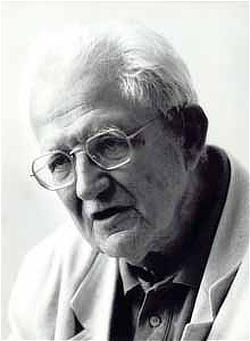 Jean Cardonnel (1921-2009), known as the “red Dominican” because of his left-wing stances, embodied protest within and outside the Church throughout the latter half of the 20th century. When he was 14 years old, his father, who had been seriously wounded in World War I, died refusing both the sacraments and a religious funeral. Although his father still claimed to be a believer, he had rebelled against the Church.
A poor student in a Catholic school, the confined atmosphere of which he detested, Jean Cardonnel conceived the idea that Jesus was not an impassive philistine but a revolutionary.
In 1936, during the Popular Front, the adolescent became enthusiastic about left-wing politics and later on was captivated by the power of Hitler’s eloquence, his ability to bespell crowds.
Eventually, he decided to become a Dominican. During his nine-year novitiate, he managed to conceal both his unwholesome illuminism and revolutionary thinking.
During his priorship at the convent of Marseille (1951-1954), Cardonnel participated in a meeting in favour of the Rosenbergs alongside the Communist mayor, became involved with defending worker priests, before fighting for the denunciation of torture during the Algerian war. He was removed from his office of prior after suffering a nervous breakdown.
Pleroma is a Greek term used by Saint Paul around fifteen times in the New Testament in the general sense of ‘fullness’. It expresses the sum total of the blessings brought to the world by Christ (Romans 15:29; Ephesians 1:23; 3:19). It is also applied to the fullness of divine excellencies and powers of the Godhead that reside in Christ corporeally (Colossians 1:19), and in the Church as the plenitude or complement of Christ (Ephesians 4:13).
Romancero: In this little-known poem, Saint John of the Cross translates the insights he received in infused contemplation, which are the experience of an affective love of God. It is incomparable. Far from being a rhetorical device, such a poem gives us an understanding of the secret of this soul in conversation with God in the midst of a mortified life, of immense solitude, whether in the unspeakable sufferings of the Toledo dungeon or in the turmoil of ministry. No, it is not ‘fake’; he expresses what he has seen: I AM loves! And this verse is the most beautiful verse in all of human mysticism.
The ‘Romancero’ is a kind of paraphrase of the Prologue of Saint John (Jn 1:1-18). Our saint uses the literary form of the popular epic in order to take some liberties with dogmatic formulas and add something from his own experience, but always in accordance with the very terms of Holy Scripture, proof that the God Who manifests Himself to him is the same God Who revealed Himself through the prophets and Apostles.
The child of Mary, consecrated to Her Immaculate Heart, discovers in the Romancero that love is all. Its symbolism is that of nuptials, but the divine reality is found in Jesus and Mary. I love You, Mary! Jesus, Jesus, I love You! O Father of all goodness, I love You with all my heart, with all my soul, with all my strength and with all my mind!
In 1984, our Father preached an 18-hour retreat on the mystical poems of Saint John of the Cross.
If this essential spirituality had been better known and lived in 17th century France, we would not have suffered from Jansenism or Quietism, for there is nothing more opposed to these errors than the doctrine of suffering for love and in imitation of Christ preached by Saint John of the Cross. It is the best remedy to offer to tormented souls, obsessed with sin, and it could do so much good today as well.
The mysticism of Saint John of the Cross is not the mysticism of Nada or even that of Todo, it is the mysticism of Love that appears on the Face of Christ crucified and in His pierced Heart:
“Oh, if only we could understand that it is impossible to reach the depths of God’s Wisdom and riches without entering into the depths of suffering in a thousand ways, the soul putting its joy and desires into it...” Spiritual Canticle (commentary on stanza 35).
It is excessively difficult to translate a poem from one language to another while expressing it in a poetic form. This English translation is designed to capture the rhythm and rhyme (bride-side) as much as the meaning, of Saint John of the Cross’ Spanish poem “Romancero”.
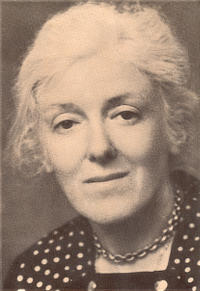 Marie Noël (1883-1967) was a French Catholic poet born in the city of Auxerre, where she lived throughout her entire life, without virtually any notable external events taking place. As she herself said, the events in her life were all internal. From an early age, she experienced truly mystical experiences. She was overwhelmed by the feeling of Jesus’ love for her. Her childhood memories delightfully depict Christian life of yesteryear, while revealing certain mystical experiences that are keys to understanding her soul:
“When I was fifteen,” she relates, “I often prayed at night. I would get on my knees and sometimes God would talk to me. One night when I had found Him ready to grant me everything, I asked Him straightaway for three things:
To suffer greatly, to be a poet, to become a saint, because it seemed to me at that time, that nothing could be greater.”
This was her vocation until her death in 1967. It was the Church’s maternal milk, it was education, devotion, Catholic piety that was at the origin of this mystical blossoming. Yet from 1903 on she encountered exceptional trials. Prevented from entering Carmel by her leftist-minded family environment, she then experienced the sorrowful mysteries. She began to express her mysticism in poetic works, which saved her from distress by plunging her into the universe of God, into the Heart of God.
Her dual nature was torn between her intimacy with God and the powerful feelings of her nature, immortalised in her poems. She, however, kept secret what dominated in her heart.
Our Father explained: “What distinguishes Marie Noël is her poetic genius combined with the greatness of her intimate, spiritual life. She is a tremendous poet, perhaps the greatest of our French literature. What makes her tremendous, though, is the way she lived her experience. Before transforming it into poems for us, she experienced it, she brought the love of God, of the Blessed Virgin and of her neighbour to a degree of incandescence in her heart. That is what makes it quite extraordinary. And this extraordinariness is offered to all of us. She helps us, through her poetry, to thrill to feelings that we are invited by God to share. It offers us food for the soul capable of raising us, of making us advance on the path of perfection.”
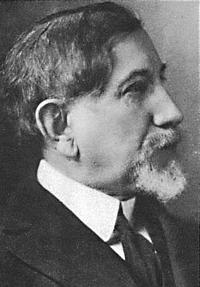 However, when Maurras celebrated the act of eating as a work of love, he did so without any religious reference.
Father Georges de Nantes: The Liturgical Year 1984-1985, sermon for the feast of the Immaculate Conception, December 8, 1984.
The Song of Songs (Canticle of Canticles)
Chapter 8, verse 5